
My Father’s Harvest and the Food Policy Scarcity
It is a bright, sunny morning in Kenya’s coastal town of Mombasa, and my father has prepared perfectly sliced fruits fresh from the farm. This is the vision that comes to mind when I think of food security. However, that is not the reality for many a household in my home country.
Rewriting the Food Systems Playbook
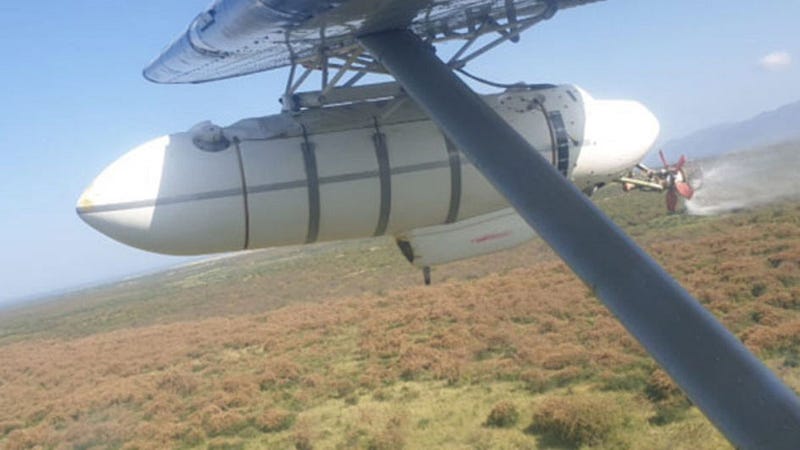
The future of agriculture is no longer something we imagine decades from now. It is already unfolding across Kenya and beyond. Farmers are no longer relying solely on experience passed down through generations. Today, decisions about when to plant, how much water to use, and even how to monitor crop health are increasingly being informed by technology, climate data, and changing consumer needs. Lately, I have found myself reflecting on how quickly these changes are happening. The way we grow, move, and consume food is evolving. These shifts may look different from one region to another yet they all point to the same reality; that the future of agriculture is being shaped by several interconnected trends. One of the clearest examples is the growing adoption of climate-smart agriculture. As weather patterns become more unpredictable, farmers are preparing for climate challenges instead of simply reacting after they occur. Climate-smart agriculture is helping them adapt while protecting the natural resources they depend on. Practices such as automated drip irrigation are improving water efficiency by delivering water directly to plant roots, reducing wastage while maintaining crop productivity. Container farming and vertical gardens are making it possible to grow fresh produce in limited spaces, especially in urban areas. My mentor, Ms. Betty Kibaara has a thriving vertical garden and she never has to buy vegetables from the supermarket or the local green grocer. Also, she is assured of chemical-free, organic vegetables. We also see the “comeback” of agroforestry, the integration of trees with crops and livestock. is improving soil health, conserving moisture, and enhancing biodiversity. These may seem like simple interventions, but together they are practical investments in the long-term sustainability of farming. Beyond adapting to climate change, farmers are also embracing digital technologies to make better decisions. Africa’s population is projected to reach at least 2.4 billion people by 2050. Feeding this growing population will require more than expanding farmland. It will require farming smarter. Speaking of digital technologies, if you’ll be attending this year’s Africa Food Systems Forum in Kigali, Rwanda; you are cordially invited to the session on Growing Youth-Powered Digital Markets hosted by FAO and SNV. The event is slated for 2 September 2026 at 10:00 am – 12:00 pm CAT. Artificial intelligence is emerging as one of the technologies with the potential to transform agriculture. By analysing large volumes of data, AI can help predict weather patterns, detect crop diseases earlier, recommend optimal planting times, and support better decision-making. This is where precision agriculture comes in. It uses technologies such as GPS, sensors, satellite imagery, drones, and data analytics to ensure crops and soil receive exactly what they need for optimum production. Instead of relying on trial and error, farmers can make informed decisions that improve efficiency while reducing unnecessary costs. Kenya is already demonstrating what this looks like in practice. Organisations such as Nuru Kenya are using drones for crop monitoring, farm mapping, and data collection, helping farmers respond more quickly to challenges while reducing time and labour. Technology alone, however, cannot build resilient food systems. Producing food is only one part of the food system while ensuring that food reaches consumers while maintaining its quality forms the rest. One encouraging trend is the growing emphasis on strengthening local food systems. School feeding initiatives in Embu, for example, are increasingly sourcing food directly from nearby farmers. Beyond providing nutritious meals to learners, these programmes create reliable markets for local producers, strengthen rural economies, and reinforce the connection between farmers and their communities. Attention is also shifting towards post-harvest management. According to the World Food Programme, the world produces enough food to nourish everyone, yet a significant portion is lost before it reaches consumers because of poor handling, storage, and transportation. For Kenya, reducing post-harvest losses presents one of the greatest opportunities to improve food security. Simple innovations such as hermetic storage bags are already making a difference. They protect harvested grain from pests and moisture without relying heavily on chemical treatments. Sometimes improving food security is not about growing more food but about preserving what has already been produced. As exciting as these innovations are, none of them can succeed without people. Young innovators and women are redefining what agriculture looks like across Kenya and the wider African continent. Young people are increasingly entering agriculture through technology, entrepreneurship, and innovation. Agritech start-ups are developing digital platforms that connect farmers to markets, financial services, weather information, and advisory support, creating employment opportunities while making agriculture more attractive to an increasingly tech-savvy generation. Women also continue to play a critical role across agricultural value chains. Investing in women farmers through improved access to land, finance, training, and technology is essential to building more productive and equitable food systems. It is encouraging that the United Nations has designated 2026 as the International Year of the Woman Farmer, recognising the vital role women play in agriculture and food systems. It is noteworthy that these trends are not happening in isolation. Climate-smart farming, digital innovation, stronger local food systems and greater investment in women and young people all reinforce each other. As these trends continue to evolve, the opportunity before us is to ensure these innovations, practices and technologies become accessible to every farmer in every community, creating an ecosystem that nourishes people, protects the planet and leaves no one behind. Amanda Namayi
The Mentor who Sold His Ferrari
Mentorship is a prescription I will gladly give to anyone who is willing to challenge themselves and to anyone considering becoming a mentor, I encourage you to take the step because the investment you make in someone’s journey will outlast you.
Welcome to the Year of the Woman Farmer
January carries with it a palpable sense of hope, rejuvenation and renewal. Declarations of rebirth and purpose unfurl across minds and timelines. This year, the aim is to spotlight women whose ingenuity feeds and sustains the community and to elevate those whose hands continue to shape our agrifood systems.
East or West, is West Best?
I am a certified East African girl by birth, citizenship and all the above; but my love for West Africa(ns) is undeniable.
From Local Gardens to Global Stages: My 2024 New Years’ Eve Edition

As I reflect on 2024 from my hometown of Mombasa, I’m filled with gratitude for the experiences, the people and the lessons that have shaped this year.
From Local Gardens to Global Stages – My 2024 Christmas Edition
As the year draws to a close and the holiday season wraps its warmth around us, I find myself reflecting on a whirlwind 2024—a year filled with immense growth, high highs, low lows and the kind of moments that shape a lifetime; a year that whisked me from local gardens to global stages. I began #My2024Purview on LinkedIn as I synthesize and share the learnings from the amazing months that made 2024 what it is to date. This year has been one rollercoaster ride of a journey, and just like a good Christmas story, it’s one of coming full circle. This Christmas feels extra special, not only for the joy the festive season brings, but also for the pain, loss, healing, adventure and lessons gained thus far. The Journey Begins: A snowy start I crossed into 2024 from the United States of America, where I ushered in the New Year from Missouri, Columbia. I enjoyed the beautiful snow-capped scenery and the darkness that came alive with all the Christmas lights. I have been to the U.S. before, but mostly to New York and on official assignment. Therefore, being in a “quiet town” during the holidays was a welcome change – it was very cutesy and very demure. Missouri is a key agricultural state in the Midwest region of the U.S. and is known for its farming activities across both its rural and central regions. The state is home to many farms, and farming is a key part of the culture and economy. Inasmuch as I was on vacation, being in a “farming state” couldn’t help but make me think of the farmers and how they contribute greatly to the state’s economy – much like in my home country, Kenya. My father is a farmer, so it goes without saying that farmers hold a special place in my heart. <3 Even while on holiday, I took time to appreciate the intricacies of food systems, and our shared responsibility to make those systems sustainable. I came across flavoured corn kernels for the first time and it had me thinking of what more we could do to add value to maize back home. It planted a seed of thought – pun intended- that would bloom as the year unfolded. April: From Kenya to Ghana – Bridging Borders April began on a high note with the Kenya-Ghana Business Forum that was held in Accra, Ghana on April 2nd 2024. The forum provided a platform for fostering bilateral trade and investment opportunities between the two nations. Graced by the Heads of State of both Ghana and Kenya, it was inspiring to witness the commitment of leaders and entrepreneurs in leveraging collaboration for economic growth. The exhibition booths at the summit comprised mostly of youth agripreneurs and I was excited to see a few favourites have their stalls there. May: Empowering Youth – Building Decent Jobs for the Future By May, I was in the vibrant city of Kigali, Rwanda, for the Decent Jobs for Youth Convening organized by the International Labour Organization (ILO). The theme was Young, Green and Digital: Global Conference of Decent Jobs for Youth. The event underscored the importance of empowering young people with opportunities that not only secure livelihoods but also align with sustainable development. The discussions ranged from entrepreneurship to policy advocacy, each reinforcing the power of collaboration in addressing youth unemployment. June: Better is the end of a thing than its Beginning – Embracing Change in the Wake of Loss The subtitle aptly alludes to what this month brought to my lap – loss. The unexpected. The unimagined. The loss was so hard and so unceremonious that it took me more than four months to merely allude to it, but could not talk about it in depth. Oh my word! It was painful. However, I grieved not as one without hope, as the Bible says. God sent me His army to comfort me, to strengthen me, to encourage me, and to lift my chin up. God’s army was made up of the sweetest, high-achieving, funny agripreneurs. Yes, I work within the food systems arena, but this is also my life. These “stakeholders” are my people – my family, my friends, my clients, my vendors, my neighbors, my advisors, my mentors, my confidantes, my churchmates, my teachers, my classmates, my mentees, my soon-to-be employees…. most of whom are in the ag. space. In essence, I never “clock out” from food systems. My all-day, day-to-day is comprised of a living, breathing multistakeholder ecosystem. And so it was, when Moses held up his hand, that Israel prevailed; and when he let down his hand, Amalek prevailed. But Moses’ hands became heavy; so they took a stone and put it under him, and he sat on it. And Aaron and Hur supported his hands, one on one side, and the other on the other side; and his hands were steady until the going down of the sun. So Joshua defeated Amalek and his people with the edge of the sword. Exodus 17: 11 – 13 NKJV These amazing, God-sent individuals anecdotally held my hands up when they were heavy, and they put the stone upon which I sat. Their prayers, calls, gifts, food, hugs, flowers, money, shopping, words of encouragement, nominations and recommendations to opportunities, and so much more; left an indelible mark in my heart. A simple thank you may never be enough but I told God to bless them each in a very special way. <3 Home for the Holidays: A Full Circle Moment As the year winds down, I’m back in Mombasa, reflecting on everything that has unfolded. Time fails me to mention about the months between June and now, but that’s what sequels are for. 😉 I will write about it before the year ends. 🙂 The fruits from my father’s orchard—bananas, mangoes, custard apple, avocados—serve as a sweet reminder of the simple yet profound connections we have to the land. The same land that nourishes us, feeds us, and sustains us, just like the
Good Food for All… and for Me Too
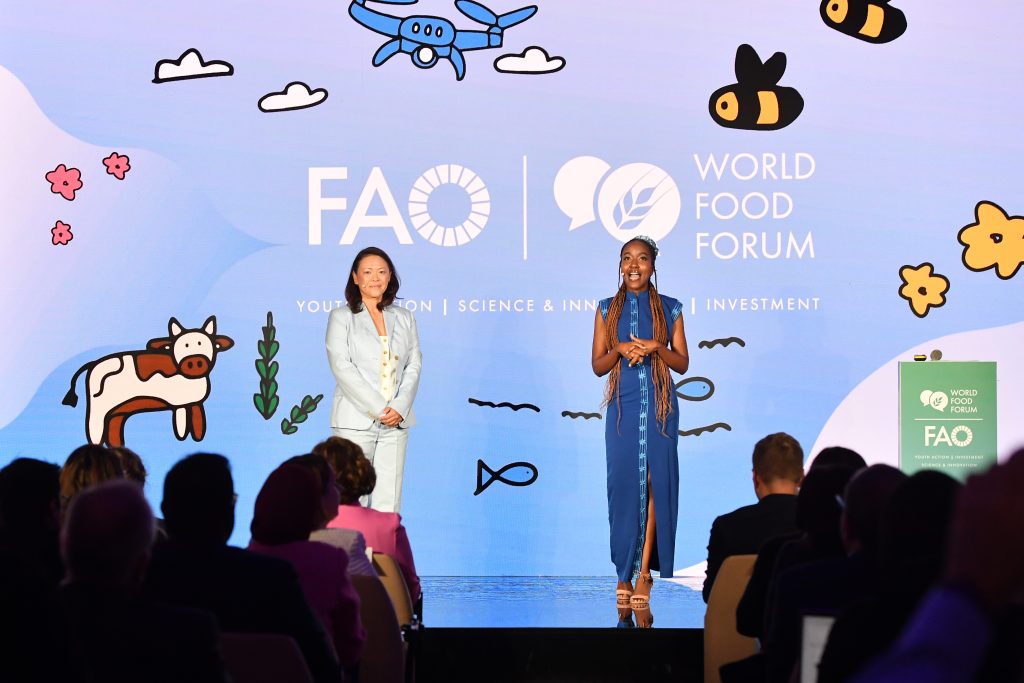
It is the last day of October 2024 and goodness me, this month has flown by! I was in Italy for technically the whole of October, returning to Nairobi yesterday, 30th October 2024. I have had quite an adventure and tales to tell from the land yonder. I was invited to participate in the World Food Forum as one of the global moderators and my experience was spectacular to say the least. There was so much to learn from the different tracks: policy, innovation, culture and education. It was humbling to be part of the intergenerational dialogue on how food systems advancement can be youth driven but supported by other stakeholders. The theme for the #WorldFoodForum2024 was “Good Food for All, for Today and for Tomorrow” and how apt could a theme get when the forum is all about food systems transformation? Interestingly, when I was moderating the Startup Innovation Awards, I had the singular honour of introducing a special category. Take a guess. Need a clue? It is the theme of the World Food Forum 2024… [drum roll] Yes! You’re right! I introduced the “Good Food for All, for Today and for Tomorrow” category At the heart of food systems is food itself. Zero Hunger, SDG 2, is all about food and nutrition. While in Italy, I got to indulge in a variety of cuisines from across the globe; from reindeer meat, to Ghanaian jollof to Nigerian moin moin to Italian pecce to Japanese seafood cuisine – you name it. It was culinary world tour. Who would figure that I would eat egusi, plantain, jollof rice, eba and catfish pepper soup in the heart of Rome, Italy? Afrik Cavour was like the holy grail of Nigerian food. The food was so delish! I went there about four times with different people. It had me thinking how the Nigerians must love their cuisine. Nigerians are fun though. I think people are generally fun. I had pizza with a Cuban – who ended up winning an award for film he did on bees. I had no idea who he was. We were sharing about where we were from and he spoke so passionately about his home country, Cuba. He encouraged me to visit there. He told me of how warm his people are. He lives in Scotland but he frequents Cuba every so often and wishes that the situation would be different economically for his people. Two days after our conversation, I was attending the Film Festival Award Ceremony and he was called up on stage to receive an award! When I saw him, I was like: I met people from all over the globe; Canada, USA, Brazil, Senegal, South Africa, Tunisia… each with their own story. I was introduced to “rain-watching” by an amazing soul from Ghana, his name is Marfo. I think he made that term up but hey, it was raining that night so why not watch it over some dessert? He introduced me to the yummiest coffee creme something something (I didn’t get the name) that we had in the middle of the night. He also introduced me to Ginseng, a drink I enjoyed to bits. Italy was a true culinary indulgence for me. During the course of the World Food Forum (WFF) and #CFS52, I enjoyed the simple and nutrient dense foods that the FAO cafeteria had to offer. My favourite choices were the egg-avocado-salmon on toast and the seafood poke bowl that would have salmon, octopus, prawns, veggies and some fruit. I had a wonderful opportunity to reconnect with the brainchild behind the original #GoodFood4All campaign which I’ve been a part of, Paul Newnham, CEO of SDG 2 Advocacy Hub. We had a discussion on the Global Alliance while immersing ourselves in the Michelin star experience curated by Chef Christine. The menu was inclusive; catering to the different palates – from duck to ravioli to sweet treats for dessert; the food took one’s taste buds on a trip from zesty to dolce and the fine selection of wine washed down the food with the perfect touch that put a bow on the whole experience. Just like the food, the conversations were wholesome as well and there was great energy in the room. Central Italy was only a foretaste (pun intended) of the culinary indulgence I would have in Southern Italy! The home of pizza. The home of pasta. I ate things I could not pronounce well, like pecce and <insert name of Southern Italian dish>. I got to enjoy seafood from the Southern coast… so yum! It was Japanese cuisine. Speaking of Japanese cuisine, again, how apt was it that I moderated the Culture and Gastronomy session with a Spotlight on Washoku at the WFF? God knows and those who know me, know that when it comes to good food, I am all about it! In Pulignana, I had so much gelato that it had me wondering who would burn those calories thereafter. The ice cream scoop servings were quite hearty! I would like to believe those calories do not count though, right? La dolce vita! My father recommended that I try out the pork in Italy and I did exactly that. My father worked a lot with Italians while he was in Malindi, a coastal town that is known for its pristine beaches and marine sea-life, and has a significant population of Italians. While in Noci, I had pork ribs and describing how it tasted will make me drool all over my keyboard. The meat was tender and well seasoned, succulent and oozing with juices. I was in culinary paradise! I will need sequels upon sequels to narrate my month in Italy because my experience was so rich and diverse! I will leave you with a quote from Virginia Woolf: “One cannot think well, love well, sleep well, if one has not dined well.” Amanda Namayi
My Monday Musings: Make hay while the sun shines
Reflecting on the just concluded #AFSForum2024 gave me a deeper appreciation on the value of striking while the iron is hot.
When we Change, the Climate Changes
Knock! Knock!Who’s there? Climate.Climate who? Climate Change. Global warming a reality dear reader. The effects of climate change are glaring in our faces.It’s all fun and games until the rains become inconsistent and the droughts and famines become increasingly grave. The level of deforestation is at an all time high and the rate of desertification is extremely alarming but still, we remain complacent in taking action. Let’s look at the ripple effects of climate change: Lack of rains also mean that the water levels in the hydro-electric power turbines are diminishing by the day and high chances are that power rationing may be the next stop gap measure in managing the limited resources. You know what that means? The electricity bills will be astronomically high – Kenyans are already feeling the pinch as it is. Yes, climate change affects more than just the weather; it affects our day to day lives in all aspects; food, health, finances, industry and every other paradigm. It is high time that farmers shift their focus from rain fed agriculture to more climate resilient farm practices. Gone are the days when the weather man’s report would be what dictates the onset of the planting season. It’s high time that the Kenyan farmer becomes proactive in employing climate smart agricultural practices. Climate change threatens to diminish crop yields, harming food security. Developing the potential to increase the productivity and incomes from smallholder crop, livestock, fish and forest production systems will be the key to achieving global food security and hopefully, achieve vision 2030 in the little time we have left. The proof is in: climate-smart agriculture can help farmers adapt to climate change and lift them out of poverty while at the same time mitigating the impact of human activities on climate change. Climate-Smart Agriculture (CSA) is an approach to help the people who manage agricultural systems respond effectively to climate change. The CSA approach pursues the triple objectives of: (a) sustainably increasing productivity and incomes –food security– (b) adapting to climate change –adaptation– and (c) reducing greenhouse gas emissions where possible –mitigation-. Climate-smart agriculture includes techniques such as agroforestry, intercropping, conservation agriculture, crop rotation, integrated crop-livestock management and improved water management. CSA relates to actions both on-farm and beyond the farm, and incorporates technologies, policies, institutions and investment. I wonder if many of us right now, across a multitude of cross cutting persuasions, see ourselves taking action in the fragility of our political, social, financial and environmental hopes. Climate action is up to you and me. What can YOU do to curb or mitigate climate change in your own way? In the words of Greta Thunberg, “…I want you to act as you would in a crisis. I want you to act as if the house was on fire—because it is“. Amanda Namayi