
I have been reading The Let Them Theory by Mel Robbins, written together with her daughter, Sawyer Robbins. It took me much longer than I had planned to because I wasn’t as consistent with my reading habit as I wanted to be. Even so, I am glad I did not give up until I turned the last page.
For my August read, I settled on a much shorter book, Ikigai. If I stay committed to my daily target of ten pages, I should finish it within two weeks. Although I have only read the first few pages, one idea has already stayed with me. Ikigai is a Japanese concept that roughly translates to “the happiness of always being busy.” More simply, it is your reason for being. It is the reason you look forward to waking up tomorrow.
As I reflected on this idea of purpose, I couldn’t help but think about International Youth Day, which is marked every year on 12th August. At first glance, the two may not seem connected. But the more I thought about it, the more I realised they have something important in common.
International Youth Day raises awareness of the opportunities and challenges facing young people while recognising their role as essential partners in achieving sustainable development. This year’s theme, “Different Contexts, Common Aspirations,” reminds us that although young people live in different circumstances, many share the same hopes: quality education, meaningful work, equal opportunities, and a sustainable future. It also recognises the resilience, leadership, and innovation demonstrated by young people, particularly those living in Least Developed Countries(LDCs), Landlocked Developing Countries(LLDCs), and Small Island Developing States (SIDS), despite the unique challenges they face.
Reading this year’s theme through the lens of Ikigai made me wonder whether purpose is what keeps many young people going. Perhaps their resilience, leadership, and determination are driven by something deeper, a reason that gets them out of bed every morning. Ikigai is often described as the place where what you love, what you are good at, what the world needs, and what you can be rewarded for intersect. For others, it is found in serving their communities or solving problems that matter. For some people, it is found in a career.
In 2012, Malala Yousafzai survived a gunshot to the head while travelling home from school. Growing up in Pakistan, Malala loved learning. However, when the Taliban took control of her hometown, girls were banned from attending school. Rather than remaining silent, she began speaking publicly about every girl’s right to an education, even though doing so put her life at risk.
Many would have chosen to step away from the advocacy after such an experience. Instead, she became even more determined to continue advocating for girls’ education around the world. Together with her father, she established the Malala Fund, an organisation that continues to champion every girl’s right to learn.
As I reflected on her story, I found myself asking whether this is what Ikigai looks like in practice. Malala discovered something she believed in so deeply that, despite unimaginable challenges, she continued to pursue it. Her story reminds me that purpose is not always about doing something extraordinary. Sometimes it is about remaining committed to something that matters.
You and I aren’t called to champion the same cause but each of us has something meaningful to contribute to. It could be through the work we do, the people we mentor, the communities we serve, or the problems we choose to solve. The important thing is to discover what that is.
As we celebrate International Youth Day 2026, I would like to leave you with one simple question: What is your Ikigai?
If you already know the answer, I hope you continue pursuing it with courage and consistency. If you don’t, perhaps let this be your assignment; take time to look within, discover what gives your life meaning, and allow it to guide you. I truly believe we all have an Ikigai. Sometimes, all we need is the willingness to look for it.
Happy International Youth Day 2026.
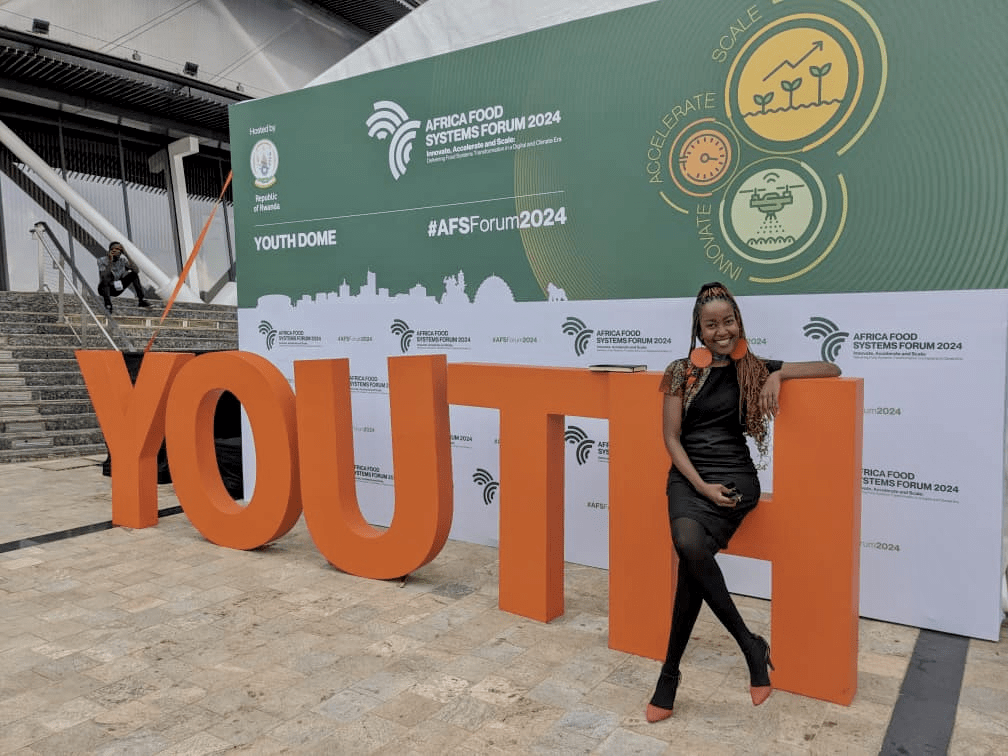
 Amanda Namayi
Leave a comment